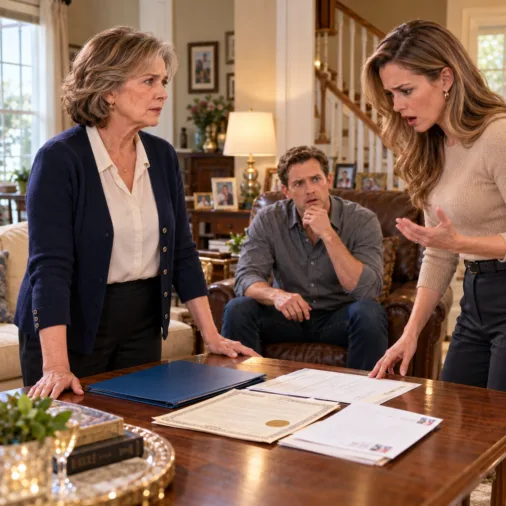
MY SON TOLD ME TO SELL MY HOME FOR HIS $150,000 DOWN PAYMENT—SO I CANCELED CHRISTMAS AND FOUND THE APPOINTMENT HE NEVER TOLD ME ABOUT
Chapter 5 5/6
The Truth He Had Hidden From Both of Us
I did not want to know.
That was my first reaction.
I had spent forty-eight hours pulling myself out of Julian’s financial life. The last thing I wanted was to climb back inside it simply because he had another confession.
So I said, “If this is between you and Brooke, tell Brooke.”
He looked at the stairs.
“I will.”
“Tonight.”
“Mom.”
“Tonight, Julian. Not after you find a better apartment. Not after the lender calls. Not after another bill is due.”
He looked miserable.
I understood why.
Truth is expensive when you have financed your life with avoidance.
But I was done subsidizing the cost of delay.
“I am not your accountant,” I said. “I am not your marriage counselor. I am not your lender. Whatever you hid from your wife is yours to explain.”
He nodded.
Then he went upstairs.
I heard voices about twenty minutes later.
Low at first.
Then sharp.
Then louder.
I went to the den and turned on music.
Lily came downstairs carrying a book.
“Are Mom and Dad fighting?”
“Yes.”
“About money?”
I looked at her.
“How do you know?”
“They always fight about money quietly.”
Children know more than adults want to believe.
I patted the sofa beside me.
She sat.
“Is it my fault because camp costs a lot?”
My heart squeezed.
“No.”
“Dad said summer is expensive.”
“Summer can be expensive. That does not make you a problem.”
“What if we don’t get a house?”
“Then your parents will find another place to live.”
“Will it be bad?”
“Different is not always bad.”
She leaned against me.
“Can we still come here?”
“When I invite you, absolutely.”
She smiled.
That mattered.
I did not want boundaries to feel like rejection to the children. I wanted them to learn the opposite lesson.
Love can be real and still have doors.
The next morning, Brooke did not come down for breakfast.
Julian did.
He looked as though he had slept in a chair, which later I learned he had.
Mason ate cereal while making engine noises with his spoon. Lily watched everyone carefully.
I kept the conversation ordinary until the children left for school.
Then Julian sat at the kitchen table.
“Brooke knows.”
“How did that go?”
“Badly.”
I poured tea.
“How much debt?”
He told me.
It was worse than the number he had admitted on the phone.
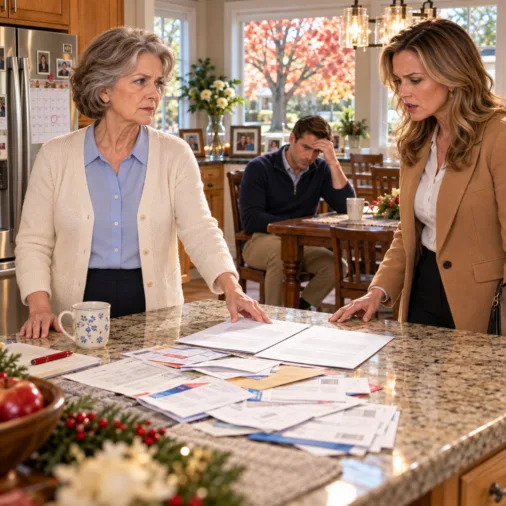
The credit-card balances were not just household expenses. They included furnishings they had bought before closing, believing they would move into a larger house. Travel. Clothing. A vehicle upgrade. A private-school deposit they could no longer comfortably afford. Nothing criminal. Nothing mysterious.
Just lifestyle inflation.
A thousand decisions that assumed future income, future financing, future family help.
I wrote nothing down.
I refused to become the planner.
“What are you going to do?” I asked.
He stared at the table.
“Sell the SUV.”
I said nothing.
“Cancel the furniture order.”
I waited.
“Move the kids back to public school next term if we have to.”
I waited.
“Find a rental we can afford.”
I nodded.
“And the cards?”
“Stop using them.”
“That is not a plan.”
He almost smiled.
“I knew you’d say that.”
“No, you did not. If you knew, we would not be here.”
He nodded.
“I’m going to call a nonprofit credit counselor.”
“Good.”
“I already canceled two subscriptions.”
I raised my eyebrows.
“That must have been devastating.”
He laughed.
A real laugh.
For a moment I saw the boy he had been.
Then his face changed again.
“Brooke thinks you’re trying to humiliate us.”
“I’m not.”
“I know.”
“Do you?”
“Yes.”
I sat across from him.
“Julian, humiliation is not the same thing as discomfort.”
He looked down.
“I know that now.”
“Do you know why I left?”
“Because we crossed a line.”
“Many lines.”
“Yes.”
I wrapped my hands around the mug.
“I left because I realized I was angry enough to say things I could not take back. And because I needed to see what belonged to me and what belonged to you.”
He looked confused.
“I’m not talking about property. I’m talking about responsibility.”
I pointed toward him.
“Your debt belongs to you.”
Then toward myself.
“My fear that you might fail belongs to me.”
He listened.
“If I pay your debt because I cannot tolerate being afraid for you, I am solving my feeling, not your problem.”
That sentence surprised me as I said it.
It was true.
I had spent years paying to reduce my own anxiety.
If Julian had a full tank, I slept better.
If his insurance was covered, I slept better.
If the grandchildren had groceries, I slept better.
I told myself the money was for him.
Some of it was.
Some of it was for my peace.
And by buying peace for myself, I had delayed adulthood for him.
He rubbed his eyes.
“Dad would have handled this better.”
“Your father would have made you sign a repayment schedule in triplicate.”
Julian smiled.
“True.”
“He loved you.”
“I know.”
“He also trusted you to survive consequences.”
Julian’s eyes filled again.
“I miss him.”
“So do I.”
We sat quietly.
Then Brooke entered.
She was fully dressed, hair neat, expression cold.
“Are you discussing our finances without me?”
Julian straightened.
“No. I was telling Mom what I’m going to do.”
“What we’re going to do.”
He looked at her.
“What are we going to do?”
The question was not hostile.
It was honest.
Brooke looked startled.
For perhaps the first time, Julian was not smoothing the path in advance.
She set her phone on the table.
“I found a short-term rental.”
“That’s good,” I said.
She ignored me.
“It’s smaller than what we need.”
Julian said, “It’s what we can afford.”
Her eyes flashed.
“What happened to the plan for the house?”
“We don’t have financing.”
“We could if your mother—”
“No.”
He said it before I could.
Brooke froze.
Julian looked pale but steady.
“Do not put this on her.”
I looked down at my tea.
This was not my argument.
Brooke stared at him.
“You told me the money was available.”
“I was wrong.”
“You told me she’d probably sell this place.”
“I was wrong.”
“You told me we could stay here until the loan was fixed.”
“I never asked her.”
“Exactly.”
The word cracked across the kitchen.
“You never ask. You just assume she’ll do it.”
Julian flinched.
Brooke turned to me.
“And she usually does.”
I looked at her.
“That part is true.”
Brooke seemed almost disappointed that I agreed.
I continued.
“I trained both of you to expect yes.”
She blinked.
“I am changing that.”
“This is easy for you. You have money.”
“No. This is difficult for me because I love my son.”
She laughed bitterly.
“Then help him.”
“I am.”
“That is not help.”
“It depends on what future I want for him.”
Julian stood.
“Brooke.”
She turned.
He spoke quietly.
“We need to move.”
Her face crumpled for the first time.
Not dramatically.
Just enough that I saw the fear underneath the entitlement.
“Where?” she asked.
“The rental.”
“It’s two bedrooms.”
“For now.”
“What about the kids?”
“They will share less space.”
“What about school?”
“We will figure it out.”
“What about everything we planned?”
Julian took a breath.
“We planned with money we didn’t have.”
The room went silent.
I had waited years to hear my son say a sentence like that.
Not because I wanted him defeated.
Because reality is the first stable ground you can build on.
Brooke sat down.
She looked suddenly younger.
“I don’t want to go backward.”
Julian sat beside her.
“We already did.”
She started crying.
I did not rush over.
That was hard.
My instinct was to comfort, offer solutions, make tea, remove pain.
Instead, I stayed where I was.
Julian put his arm around his wife.
Good.
Let them turn toward each other.
Not toward me.
They signed the short-term rental that afternoon.
The place was twenty minutes away, two bedrooms, plain, clean, no white columns, no hydrangeas, no assumption that someone else would cover the difference.
For the next six days, my house became a moving station again.
But this time the direction was outward.
Brooke returned my robe without comment.
She moved her cosmetics from my dresser.
Julian packed boxes.
I kept the children after school twice because I chose to, not because I was assigned to.
The distinction changed everything.
On Friday, a delivery truck arrived with three enormous furniture boxes.
Brooke’s face went white.
“The order.”
Julian walked outside and refused delivery.
I watched from the window.
The old Julian would have accepted it, then asked me whether he could store the furniture in my garage.
The new Julian signed the refusal slip.
That evening he showed me the cancellation email.
I said, “You do not need my approval.”
“I know.”
“Then why are you showing me?”
He smiled.
“I think I need proof for myself.”
I understood.
On Sunday morning, the SUV disappeared.
Julian sold it to a dealership and bought an older used sedan with cash left after paying off the vehicle balance.
Brooke hated it.
She said so.
But she got in.
By Sunday afternoon, only two boxes remained in my hallway.
Lily hugged me so hard I nearly lost my balance.
Mason asked if he could leave one dinosaur in my guest room “for emergencies.”
I agreed.
Brooke carried the last bag to the door.
Then she stopped.
For several seconds, she seemed to fight with herself.
Finally she said, “I was wrong to use your bedroom.”
I waited.
She looked at me.
“And to assume we could stay.”
I nodded.
“Thank you.”
She swallowed.
“I still think you could have handled this differently.”
“I probably could have.”
That surprised her.
“I am not claiming perfection, Brooke.”
Her shoulders lowered slightly.
“I just needed you to understand that your emergency did not erase me.”
She looked away.
Then she said, almost too quietly to hear, “I was scared.”
“So was I.”
She looked back.
“Of what?”
“Losing myself inside my own house.”
Her eyes changed.
Not agreement.
Recognition.
Sometimes that is enough for one day.
Julian came back from the car and handed me something.
A key.
My spare house key.
I stared at it.
“You don’t want me to have it?”
“I want you to decide if I have it.”
That almost undid me.
I closed my fingers around the key.
“Thank you.”
He kissed my cheek.
Then my son, his wife, and my grandchildren drove away.
The house was silent again.
I stood in the foyer surrounded by faint marks where boxes had rested against the wall.
For the first time in a week, I could hear the clock in the den.
I should have felt victorious.
Instead, I cried.
Not because I regretted the boundary.
Because necessary things can still hurt.
That night, I opened the account that had once been called the Harper Home Fund.
The balance was still there.
I did not send it to Julian.
I did not spend it.
I simply renamed the account.
Freedom Reserve.
Then I turned off the lamp and slept in my own bed.